Address
304 North Cardinal St.
Dorchester Center, MA 02124
Work Hours
Monday to Friday: 7AM - 7PM
Weekend: 10AM - 5PM
Address
304 North Cardinal St.
Dorchester Center, MA 02124
Work Hours
Monday to Friday: 7AM - 7PM
Weekend: 10AM - 5PM

Storm season along the Gulf Coast often shows up right when your AC is working the hardest. In late May, homes and businesses around Houston and Richmond are already running the air conditioner almost nonstop. At the same time, we start to see stronger storms, heavy rain, and lightning.
Those storms can be tough on your cooling system. Power surges can damage electrical parts, flooding can reach your equipment, and flying debris can hit your outdoor unit. A little planning before the bad weather arrives can keep your AC safer and help you avoid losing cool air when you need it most.
In this guide, we walk through a simple pre-storm checklist you can use. We will cover surge protection, shutdown steps, drain line prep, outdoor unit safeguards, and what to look for after the storm passes so you can reduce the chance of needing emergency air conditioning repair in Houston or Richmond.
Strong Gulf storms bring lightning, high winds, and sudden power changes. When the power flickers or surges, it can hit your AC system hard. Circuit boards, compressors, and thermostats are all sensitive to those fast spikes in electricity.
There are two common ways to add extra protection for your AC:
A whole-home surge protector is mounted at your main panel and helps guard every circuit inside. A dedicated protector is installed for the AC equipment itself. Older homes around Houston and Richmond, especially ones with aging electrical systems, can benefit from modern surge protection that is correctly sized and installed.
Any surge device should be installed by a licensed HVAC or electrical professional. That way, the wiring, grounding, and sizing are checked carefully and matched to your system.
Before a major storm is forecast, it also helps to power your AC down in a smart way:
Try not to turn the system on and off again and again as the storm comes and goes. Rapid cycling like that can be hard on motors and electronics, especially when the power grid is unstable. A clean shutdown before the worst of the storm often means a smoother start-up later and less chance of needing air conditioning repair in Houston after a big hit to the grid.
High humidity is a way of life in our area, and your AC has to pull a lot of moisture out of the air. All that water drains away through a small plastic pipe called the condensate drain line. During late spring, with heavy AC use and sticky air, that line can build up algae, mold, and debris.
When the drain line clogs, the water has nowhere to go. It can back up into the indoor unit, overflow the drain pan, and lead to:
Before storm season ramps up, it helps to know where your drain line and any safety devices are. Most systems have a white PVC pipe near the indoor unit. Many modern setups also have a wet switch or float switch that shuts the system off if water starts to back up.
A simple, homeowner-safe step some systems allow is gently pouring a small amount of distilled white vinegar into the drain line access point. This can help keep algae growth down if it is recommended for your particular system. It is also smart to look around the indoor unit for signs of moisture or standing water both before and after heavy storms.
You should call a professional if you notice:
Regular HVAC maintenance visits in Houston and Richmond before peak storm season are a good time to have your drain line inspected and flushed. A trained tech can spot small blockages or drain issues before they turn into soaked ceilings and major repairs.
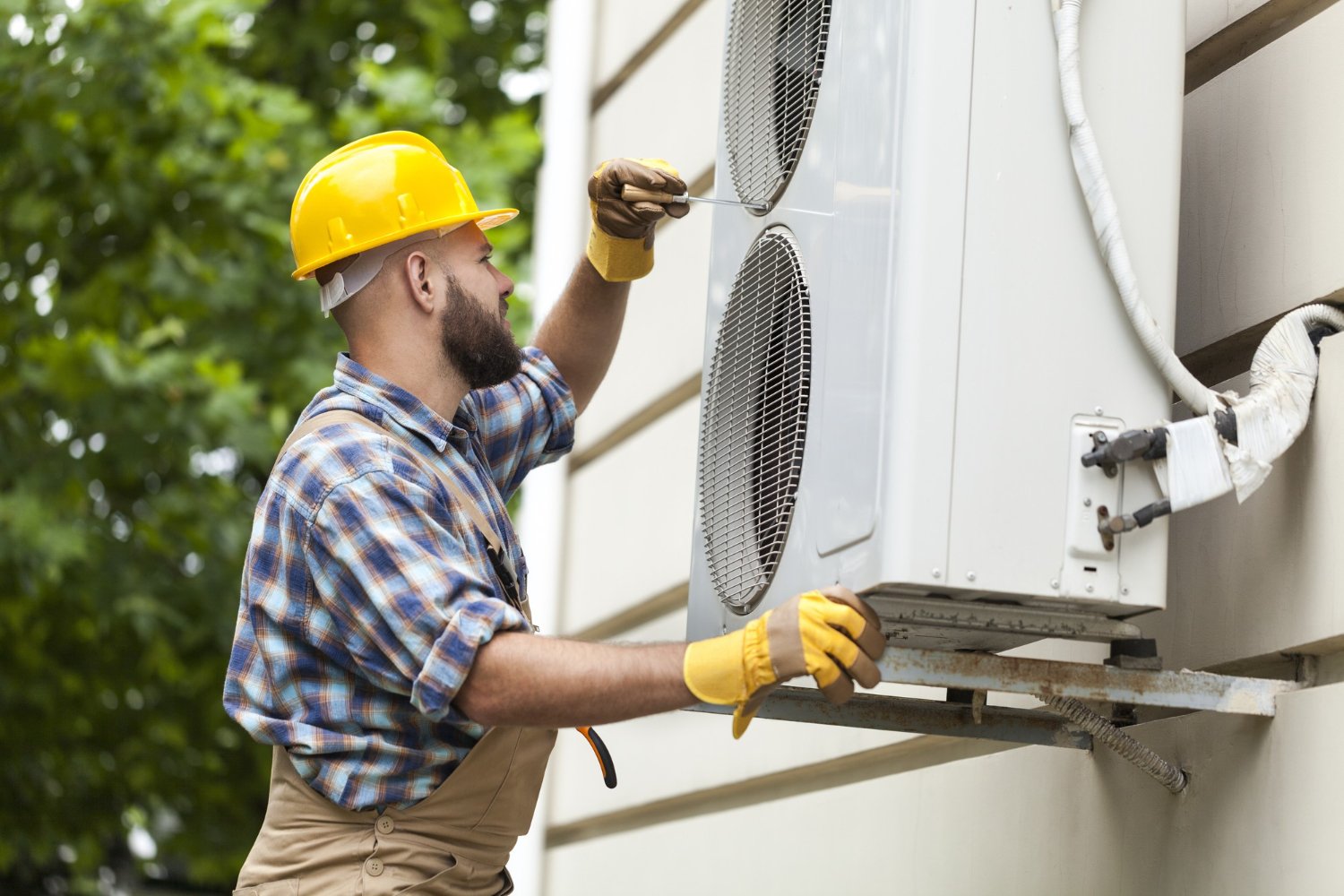
Your outdoor condenser sits right in the path of wind and debris during a storm. Strong gusts can toss branches, toys, lawn furniture, and other loose items into the unit. That impact can bend the thin metal fins, damage the fan, or even dent the housing.
Flooding is also a concern in low areas or places with poor drainage. Standing water around the condenser can reach electrical parts or shorten the life of the unit if it happens again and again.
Before storms roll in, spend a few minutes outside:
Take a look at the condenser pad as well. It should be stable, level, and high enough to help keep the unit out of shallow pooling water. If the pad is sinking, cracking, or tilting, a professional can advise you on the best fix.
Many people want to cover the AC unit before a big storm, but it is easy to do this the wrong way. Avoid wrapping the unit in tight plastic or an airtight tarp. These can trap moisture, cause rust, and invite pests.
If you plan to use a cover, here are some tips:
This helps protect against falling debris without creating long-term moisture problems.
When the sky clears and the power comes back, it can be tempting to flip the AC on right away. A quick safety check first can save you from causing more damage.
Start with a walk around the outdoor unit:
If you see any electrical hazards, keep your distance and follow local safety guidance. Do not touch the unit if it is sitting in water.
Inside, take a minute to:
Once the area is dry, the power is stable, and there is no visible damage, you can turn the breaker back on, then turn the system on at the thermostat. Listen closely when it starts. If you hear loud humming, grinding, or buzzing, or smell anything burning, turn it off and get professional help.
It is also time to call for service if:
Fast air conditioning repair in Houston and Richmond matters after a storm, because indoor spaces heat up quickly in our climate, especially with high humidity and strong sun.
Storm prep is always easier before the first big system shows up on the radar. A short checklist now can mean fewer surprises later: surge protection, a safe shutdown plan, clear drain lines, a tidy outdoor area, and careful checks before you restart your AC.
Homeowners and businesses around Houston, Richmond, and nearby communities can benefit from having a local HVAC team that understands Gulf Coast weather and how it affects AC systems. Professional inspections and maintenance before and after storm season help keep your equipment safer, your indoor spaces more comfortable, and your risk of major damage lower when the next round of strong storms arrives.
If your home is struggling to stay cool, our team at Economical Mechanical Services is ready to help with expert air conditioning repair in Houston. We troubleshoot problems quickly, explain your options clearly, and complete repairs with care so you can get back to a comfortable home. Reach out today through our contact us form to schedule your service or request a quote.